See actual scorecard and handicap drops from golfers who completed the 30-day program.
Case Study #1 • Robert M. (Age 62)-17 Strokes
Starting Score
98 Avg
After 30 Days
81 Clean
"I had a nasty slice off the tee for 12 years. Week 2's hip-trigger drill clicked on my first driving range session. I went from losing 3 balls a round to shooting 81 at my local club."
RM
Robert M.
Phoenix, AZ • 30-Day Graduate
Case Study #2 • David K. (Age 54)+32 Yards
Driver Distance
215 Yds
Driver Distance
247 Yds
"The kinetic chain setup eliminated my casting habit. Adding 30+ yards without swinging out of my shoes felt like magic. My playing buddies were stunned."
DK
David K.
Atlanta, GA • 30-Day Graduate
Structured Progression
Your 30-Day Roadmap
Daily 15-minute drills designed to fit into your busy schedule.
1
Week 1: Grip & Biomechanics
Fix setup alignment, kill the slice at address, and master the kinetic chain balance.
2
Week 2: Driver Speed & Power
Learn the rotational hip snap to add 20–30+ yards without forceful swinging.
🔒 256-Bit SSL Encrypted💳 PayPal / Apple Pay / Cards⚡ Instant PDF Delivery
🛡️
100% 30-Day Money-Back Guarantee: If you don't lower your score in 30 days, get an instant 100% refund. Zero risk.
Common Questions
Frequently Asked Questions
Everything you need to know before getting started.
Will this work for older golfers or higher handicappers?▼
Yes, 100%. The program is engineered around kinetic body mechanics and rotational balance rather than extreme flexibility or violent athletic force. Golfers in their 50s, 60s, and 70s thrive on this routine.
How and when do I receive the training materials?▼
Delivery is 100% instant! Immediately upon completing checkout, you will receive immediate download access to the complete digital guide (PDF and ePub format) along with a backup link sent to your email.
Can I read and follow the drills on my phone?▼
Absolutely. The files are formatted for seamless reading on iPhone, iPad, Android, Kindle, Mac, and PC so you can easily reference drills directly at the driving range.
What if I accidentally delete or lose my files?▼
Don't worry at all! You have permanent lifetime access. If you ever switch devices, misplace your files, or need a fresh copy, simply email us directly at az4affiliates@gmail.com, and we will personally resend your complete download vault right away.
What if the program doesn't work for me?▼
You are fully protected by our 30-Day No-Questions-Asked Money-Back Guarantee. If you don't drop strokes and strike the ball with more confidence, email us for a full 100% refund.
Verified Customer Reviews
What Golfers Are Saying
★★★★★
VERIFIED BUYER
"At 64 years old, I honestly thought my best golfing years were behind me. I was slicing my driver constantly and losing 25 yards to my friends. Week 2's hip-trigger and kinematic lag drill changed everything. Last weekend I shot a clean 79 — my lowest round in 14 years!"
Robert Hayes
Pinehurst, NC • 14 → 7 Handicap
★★★★★
VERIFIED BUYER
"I've spent over $1,200 on private PGA lessons that left me confused with 50 swing thoughts. This 30-day guide simplified everything into daily 15-minute range habits. I gained +28 yards on my driver with zero lower back ache on the 18th hole."
Richard Vance
Scottsdale, AZ • +28 Yds Driver Gain
Free Preview
Try A Sample Lesson
Lesson 1: The "Bird-Grip" & Athletic Hip Hinge
FOUNDATION (DAYS 1–3)
The Fatal Amateur Mistake: 85% of high handicappers grip the club in their palms with white-knuckle tension (10/10 pressure), locking the wrists and destroying clubhead lag.
✓ The 3-Step Pro Fix:
Diagonal Finger Placement: Lay the shaft diagonally across the base of your fingers, NOT deep in the palm pad.
Pressure Rating (3.5 / 10): Grip the handle like you are holding a small bird — secure enough it won't slip, but gentle enough you don't hurt it.
Spine Hinge: Bow forward directly from the hip sockets (keep lower back flat), allowing your arms to hang straight down naturally from your shoulders.
💡 Instant Result: Unlocks +12 mph of natural whip speed through impact without swinging any harder.
Lesson 2: The Hip-Trigger & Anti-Slice Slot
POWER (DAYS 6–10)
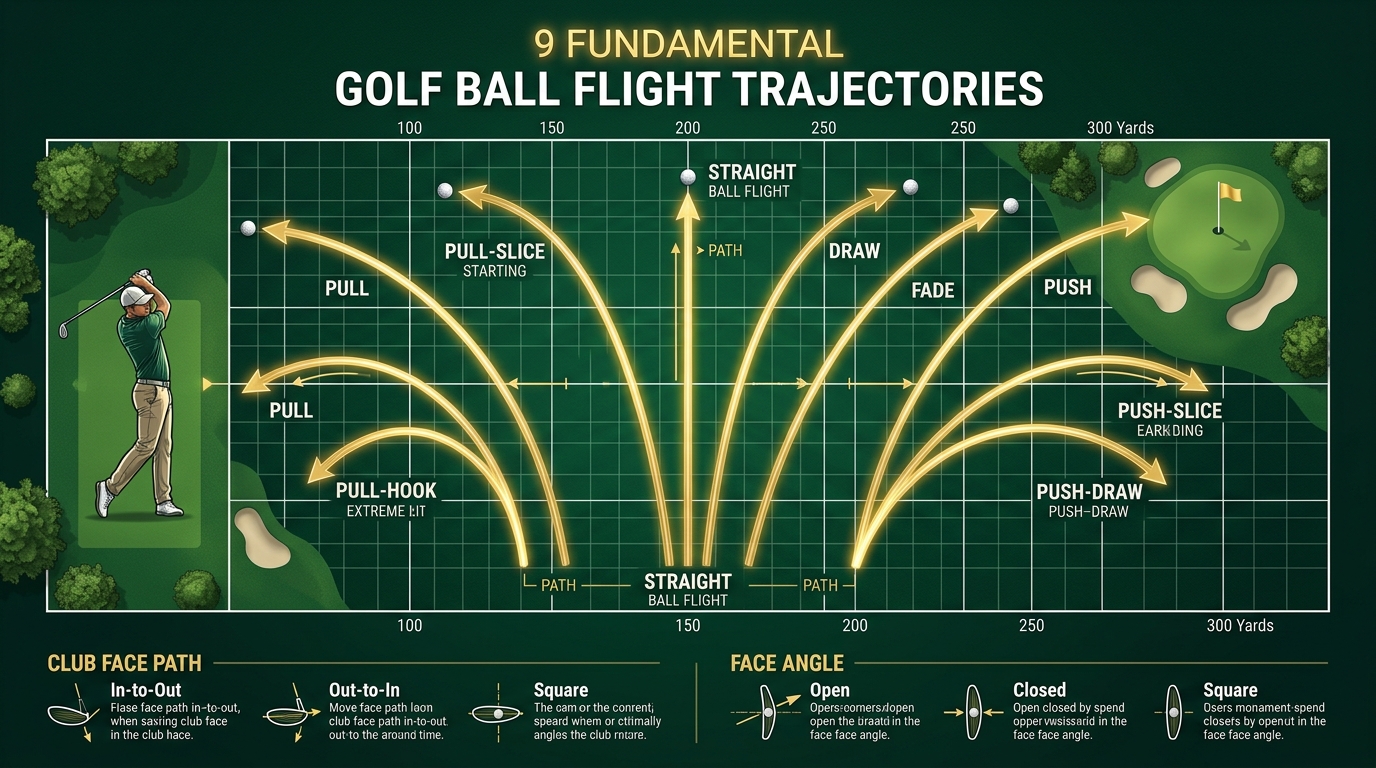
The Slice Trap: Rushing the transition by throwing the hands and right shoulder forward ("casting") forces the club outside-in across the ball, producing a weak push-slice.
✓ The Kinetic Chain Downswing Sequence:
The 0.1-Second Pause: Allow your backswing to complete at the top before moving downward.
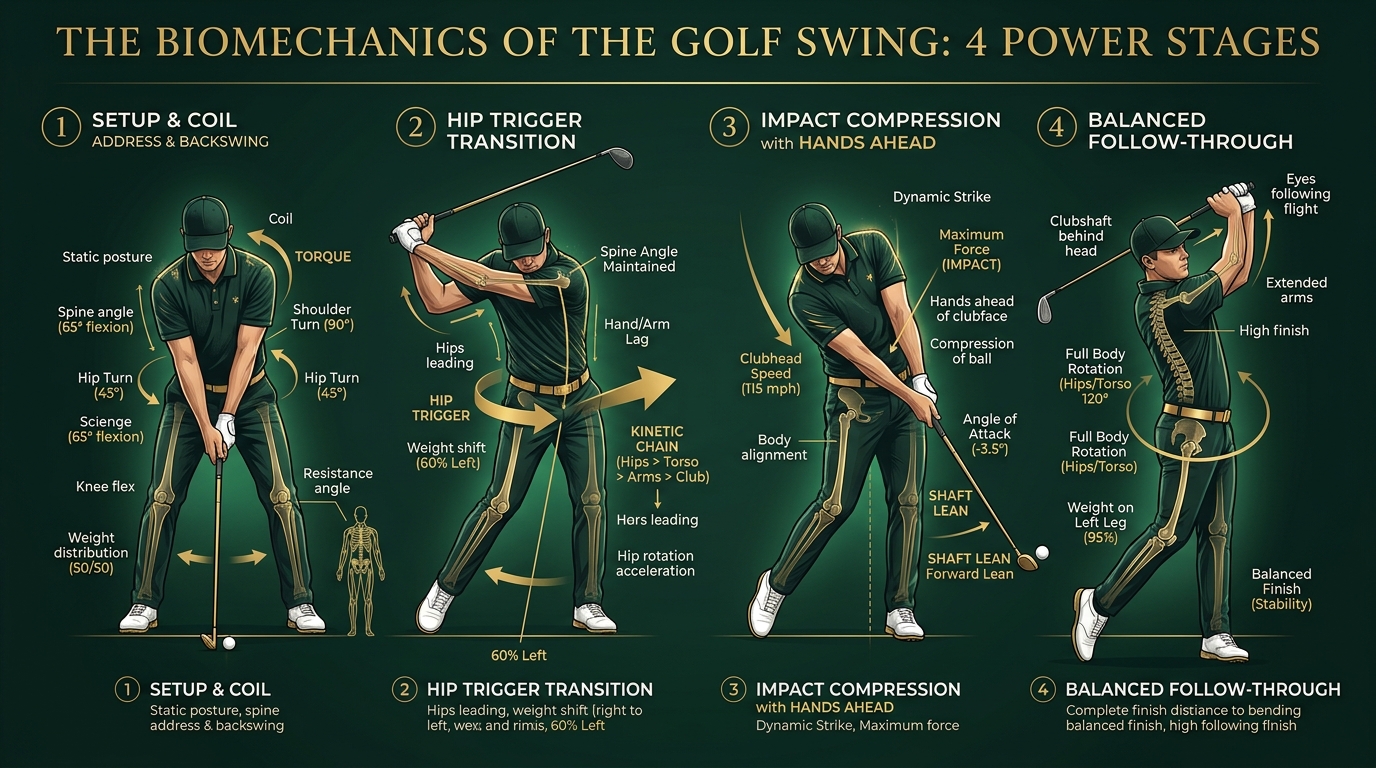
Lead Hip Bump: Shift 70% of your pressure into your lead front heel to initiate the turn — leave your hands back.
Dropping Into The "Slot": As hips uncoil, the club drops naturally inside the target line, shallowing the attack angle for an explosive inside-out draw strike.
💡 Instant Result: Completely kills the banana slice and turns it into a piercing 10-yard baby draw.
Lesson 3: The Clock-Pendulum & Speed Elimination
SHORT GAME (DAYS 11–15)
The 3-Putt Nightmare: 40% of all strokes on your scorecard are putts. Most amateur golfers manipulate the putter head with their wrists, destroying speed consistency.
✓ The Tour Putting Blueprint:
Locked Triangle: Form a solid inverted triangle with your shoulders, arms, and putter grip. Wrists stay 100% frozen.
Pendulum Rhythm (2:1 Ratio): Rock large shoulder muscles like a grandfather clock pendulum. Match your backstroke length to follow-through length.
Keep Eyes Over The Ball: Set your eyes directly above the target line to eliminate parallax reading errors.
💡 Instant Result: Eliminates 3-putts and leaves second putts within tap-in range (18 inches).
Quick Quiz
Test Your Golf IQ
Question 1 of 4
What initiates the downswing for maximum power & distance?
🏌️
Mark T. (Tampa, FL) just purchased Golf Mastery!
Verified Buyer • 3 mins ago
🎁
Wait! Special One-Time Offer
Take An Extra $15 OFF
Don't leave empty-handed! Use this instant coupon code at checkout to claim the complete system for just $82.00: